The cult of the genius
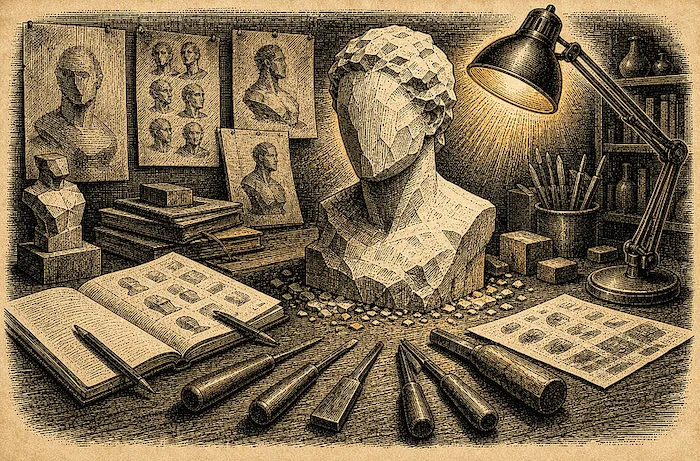
The concept of genius has long been romanticised, often leading to a sense of complacency and reluctance to strive for greatness. Nietzsche’s thoughts on this matter invite us to reconsider our understanding of genius and to focus on the importance of hard work and dedication.
“We do not ask how it came to be. Instead, we rejoice in the present fact as though it came out of the ground by magic.”
— Nietzsche
Our self-esteem and pride encourage us to view genius as something mystical, which allows us to avoid comparing ourselves and feeling inadequate. Labelling someone as “divine” implies that there is no need to compete with them. In essence, mythologising natural talent provides a convenient excuse to remain complacent with the status quo.
Nietzsche emphasises the importance of viewing exceptional individuals as, above all, skilled artisans. He isn’t denying that talent exists; he’s criticising our habit of treating genius as magic rather than craft, admiring the finished masterpiece while ignoring the years of unglamorous practice behind it. Many great figures, he points out, reached their heights through sheer work and dedication. These individuals focused on mastering smaller tasks before attempting to create something monumental. They all possessed that seriousness of the efficient workman who first learns to construct the parts properly before they venture to fashion a great whole; they allow themselves time for it, because they took more pleasure in making the little, secondary things well than in the effect of a dazzling whole.
You can watch the same myth at work today. We call a founder a “visionary” or a programmer a “10x engineer” as if the output simply appeared, when behind it sits a long ledger of small, deliberate reps: the writer who drafted and binned a hundred pages, the engineer who quietly debugged a thousand edge cases, the designer who shipped and reworked the same screen a dozen times. Deliberate practice is unglamorous precisely because it is incremental, and that is exactly why the genius myth is so seductive. It lets us admire the result without reckoning with the work.